
Pompeii: The City That Stopped Time
What Makes Pompeii One of Italy’s Most Moving Historic Sites?
Pompeii is unforgettable because it feels like the moment the ancient world stopped breathing. The entire city was frozen in place in 79 AD, sealed under nearly 25 feet of volcanic ash. When you walk through its gates, you don’t just see ruins—you step directly into the 1st century.
Today was Day 11 of our tour, and even after all these years of guiding groups here, I still watch the same reaction unfold. People walk through the Porta Marina entrance, stop, and fall silent. The streets, the shops, the frescoes overhead—it all rises up around you like time folding back on itself.


How Big Is Pompeii and What Can You Actually See?
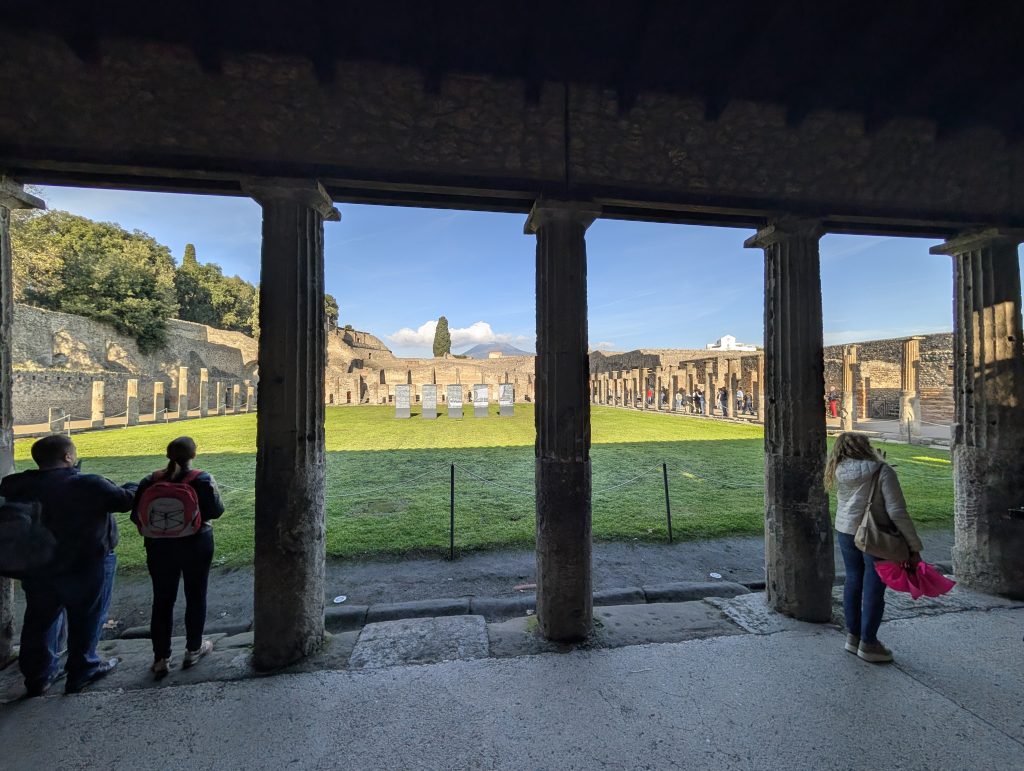
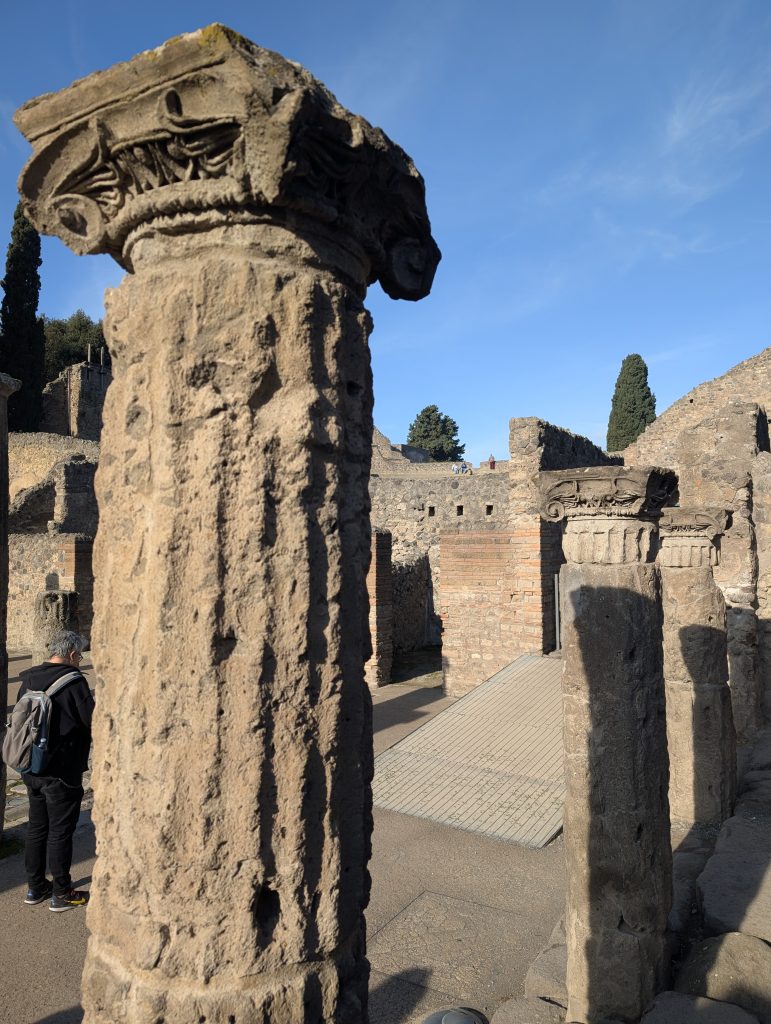
Pompeii covers 165 acres, and 115 of those acres are fully excavated and open for exploration. That size becomes real as you walk the wide stone roads, pass by ancient storefronts, look up at ceilings where bright frescoes still cling, and step into homes where excavators continue to uncover new details even today.
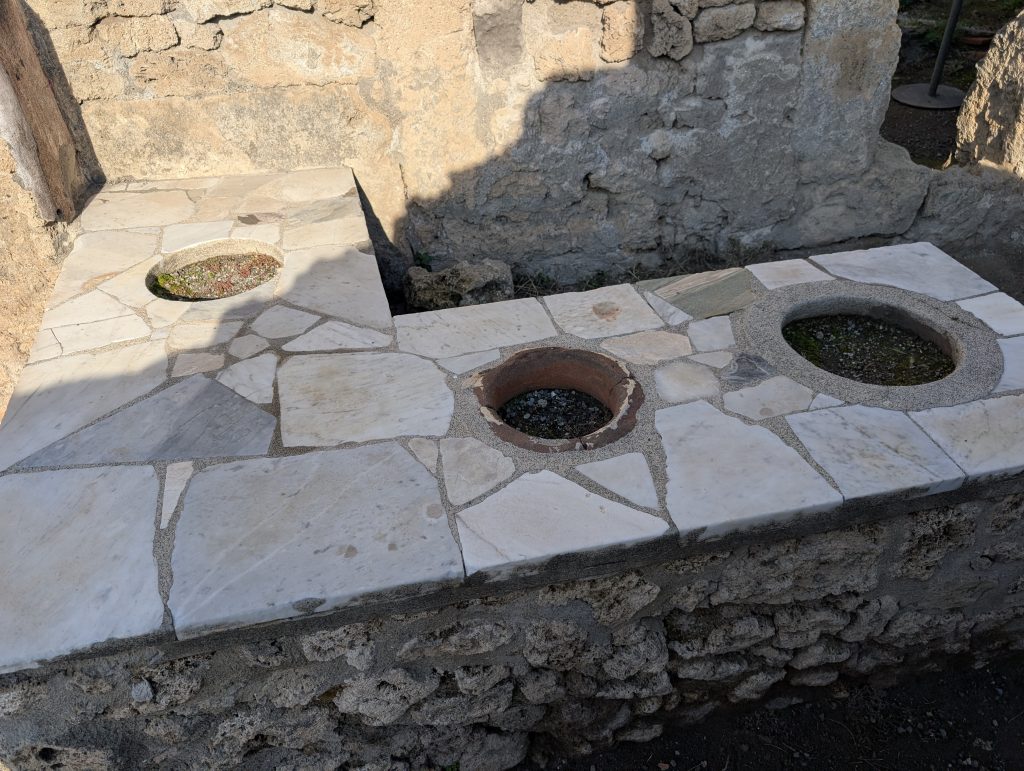
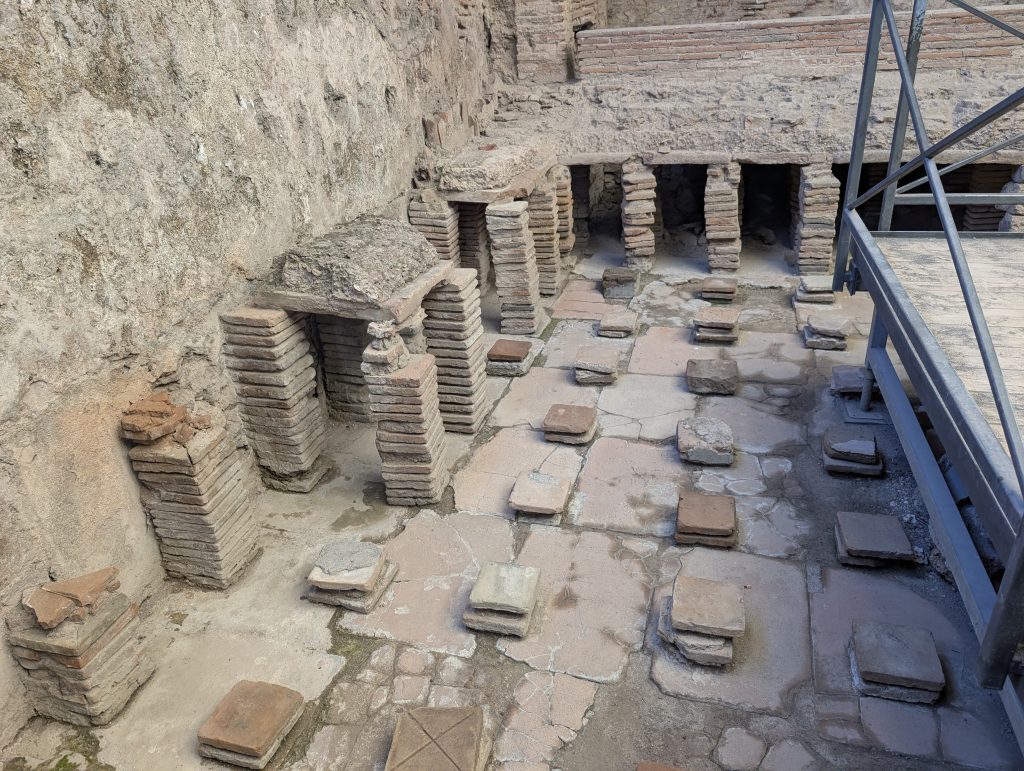
Because the city was buried—not burned—the preservation is astonishing. Clay ovens, shop counters, stepping stones, even the grooves of wagon wheels remain exactly where the people of Pompeii left them.



Why Didn’t Lava Destroy Pompeii?
It surprises many visitors to learn that it wasn’t lava that ended life here.
For two straight days, ash fell from Mount Vesuvius until it buried the city entirely. It disappeared for almost seventeen centuries, rediscovered only in 1748 and opened to the public in 1874.
And just to clarify—Vesuvius, not Etna (Etna is in Sicily), is the volcano that looms over Naples. It has erupted seven times since Pompeii’s destruction, never with the same disastrous force, but always reminding people living in its shadow of the fragility of life.
There’s a Neapolitan saying I love: “Chi s’arrangia, campa.”
Those who improvise, survive.
You feel that resilience everywhere in this region.


Exploring Pompeii With a Local Expert
We entered through the Porta Marina gate with our exceptional local guide, Giancarla. This entrance once opened directly onto the sea. Today, the shoreline sits about 700 meters away, filled in by centuries of volcanic deposits. Standing there, it’s almost impossible to imagine the ancient waterfront—but that’s the magic of Pompeii. Everything you think you know shifts once you’re inside.
Over the years, I’ve expanded this day to include quieter areas most visitors never reach. These sections are the heart of the city. You see kitchens with deep clay basins, bakeries with millstones still in place, workshops, and fragments of frescoes glowing under the protective shade of surviving ceilings.
This is where Pompeii stops being a tragedy and becomes a story of real lives.


Options for All Travelers
Pompeii is large, and the walking can be intense. So I always offer two paths.
If exploring on foot isn’t your thing, I’ll take you personally to the interactive museum—one of the best in the region—and meet you after for lunch. Everyone gets an unforgettable experience, tailored to how they want their day to feel.
Today’s lunch was classic Campania—fresh pizza, melon desserts, and that lively, joyful table energy that always seems to follow this group. There was even a moment involving our guide and a bottle of Jack Daniels that had the whole group laughing.
After eleven incredible days, this was our last post of the tour. And what a way to end it.
FAQ: Planning a Visit to Pompeii
How long does it take to see Pompeii?
Most travelers spend 3–4 hours, but a full-day visit reveals the deeper story.
Is Pompeii difficult to walk?
Parts are uneven and require good mobility, but museum alternatives are available.
What’s the best entrance?
Porta Marina gives the most historically accurate introduction to the city.
Is Vesuvius active?
Yes, but monitored closely. The current risk for visitors is considered low.
Come With Me on Our Next Italy Tour
If you felt connected to today’s journey, imagine experiencing it in person—standing on the ancient stones, tasting the regional dishes, and letting Italy unfold day by day.
That’s the Coco’s Travel difference: effortless, elegant, and unforgettable.
So, where will we go next?
Check out our upcoming Italy tours:
https://destinationitalybycocos.com/upcoming-tours-by-dates
Email your interest to:
Chuck@CocosItalianMarket.com